
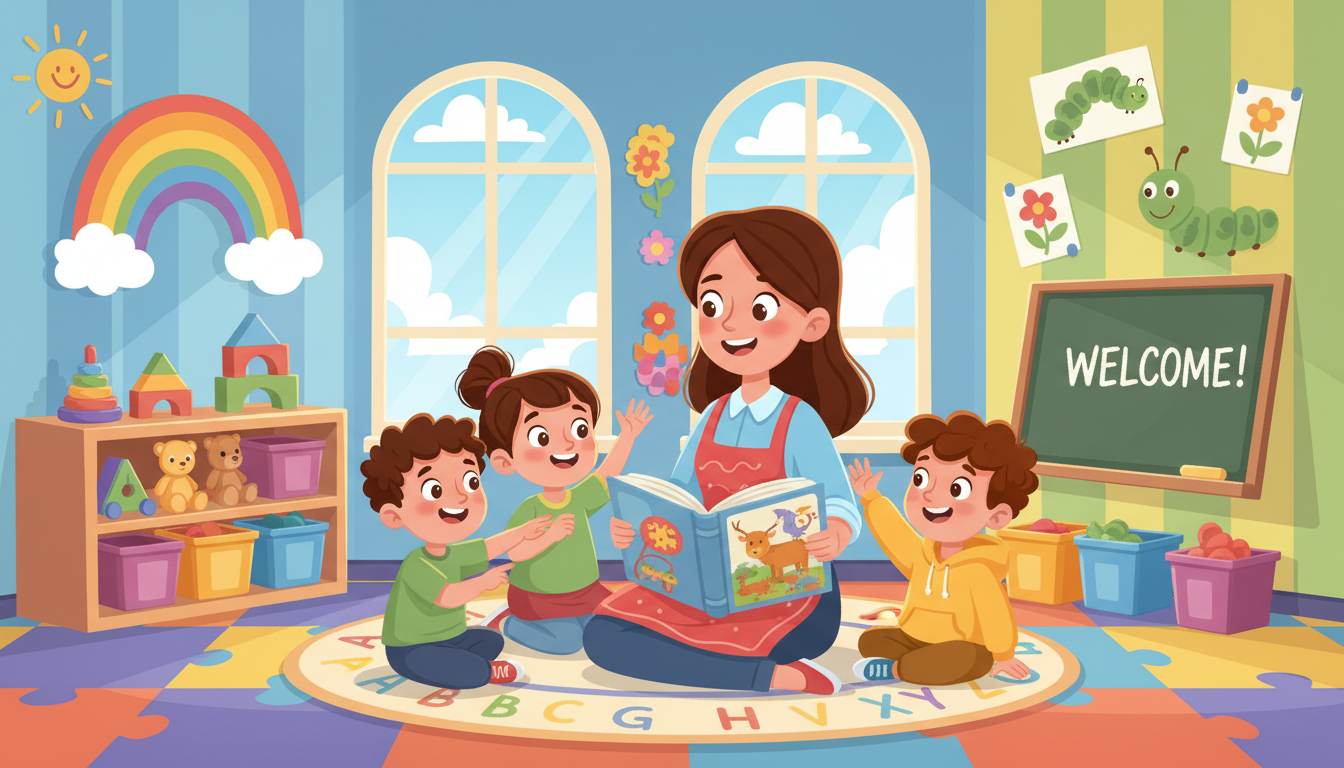
Creating an engaging and enjoyable learning environment for preschoolers and young children is essential for their overall development and lifelong love of learning. When education is fun, children are more motivated, curious, and confident, which sets a strong foundation for academic success and personal growth. In this blog post, we will explore why fun matters in early learning, innovative ways to incorporate math and movement, the role of intrinsic motivation, social-emotional benefits, and practical tips for parents and educators to make learning an exciting adventure.
1. Why Fun Matters in Early Learning
Fun is not just a luxury in education; it is a necessity. Young children learn best when they are actively engaged and enjoying the process. Fun learning experiences stimulate the brain, enhance memory retention, and encourage creativity. When children associate learning with positive emotions, they develop a natural curiosity and eagerness to explore new concepts.
In early childhood, play is the primary mode of learning. Through play, children experiment, solve problems, and develop critical thinking skills. Fun activities also foster social interaction, language development, and motor skills, all of which are crucial during the preschool years.
2. Math in Motion: Making Numbers Come Alive
Math can sometimes feel abstract and intimidating, but incorporating movement and hands-on activities can transform it into an exciting adventure. “Math in Motion” is an approach that combines physical activity with mathematical concepts to help children understand numbers, 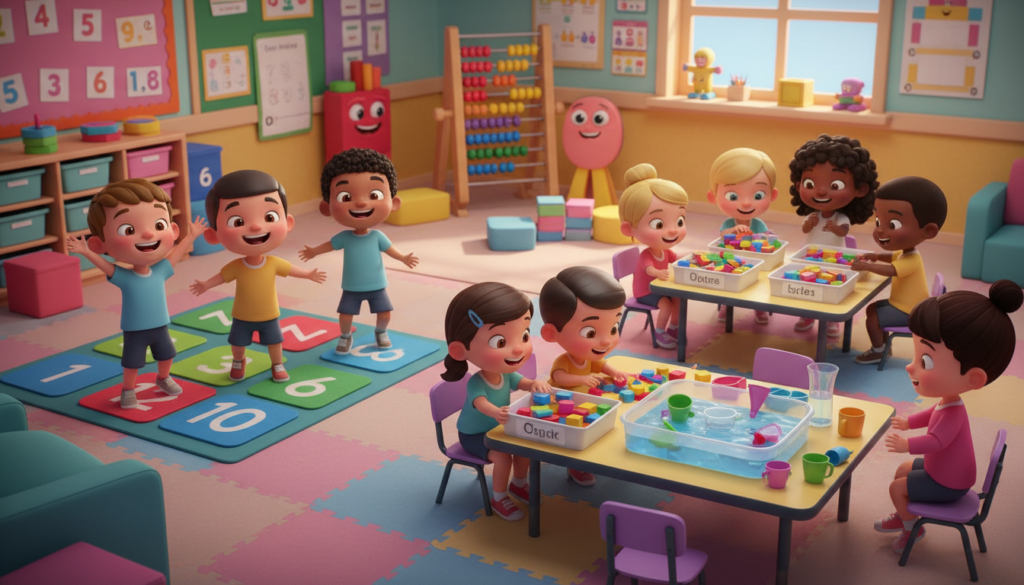 shapes, patterns, and measurements in a tangible way.
For example, children can hop along numbered mats to practice counting, sort colourful blocks by shape and size, or use measuring cups in water play to explore volume. These activities not only make math fun but also help develop fine and gross motor skills.
Interactive games like “Number Treasure Hunt,” where kids search for hidden numbers around the classroom or home, encourage active participation and reinforce number recognition. Using music and rhythm to teach counting or patterns also adds an enjoyable sensory dimension to math learning.
3. Intrinsic Motivation: The Power of Self-Driven Learning
Intrinsic motivation refers to the internal desire to learn and explore for the sheer joy of it, rather than external rewards or pressures. When children are intrinsically motivated, they engage deeply, persist through challenges, and develop a lifelong love of learning.
To nurture intrinsic motivation, educators and parents should provide choices, encourage curiosity, and create a safe environment where mistakes are seen as learning opportunities. Open-ended activities, such as building with blocks, storytelling, or art projects, allow children to express themselves and follow their interests.
Celebrating effort rather than just outcomes helps children value the learning process. Asking open-ended questions like “What do you think will happen if…?” or “How did you solve that problem?” promotes reflection and critical thinking.
4. Social-Emotional Growth Through Fun Learning
Learning is not just about academics; it is also about developing social and emotional skills. Fun group activities foster cooperation, communication, empathy, and conflict resolution. These skills are essential for building positive relationships and navigating social situations.
Role-playing games, collaborative art projects, and team challenges encourage children to work together, share ideas, and respect different perspectives. Teachers and parents can model positive behaviors and guide children in expressing their feelings and managing emotions.
For example, a “Feelings Circle” where children share how they feel and listen to others helps build emotional literacy. Games that require turn-taking and following rules teach patience and self-control.
5. Reduced Pressure, Increased Confidence
A fun learning environment reduces the pressure and anxiety often associated with traditional education. When children feel safe and supported, they are more willing to take risks and try new things without fear of failure.
This positive atmosphere boosts self-confidence and resilience. Children learn that making mistakes is a natural part of learning and that persistence leads to success. Encouraging exploration and creativity without rigid expectations allows children to discover their strengths and interests.
For instance, using playful assessments like drawing or storytelling instead of formal tests can provide valuable insights into a child’s understanding while keeping the experience enjoyable.
6. Tips for Parents and Educators: How to Make Any Learning Fun
Making learning fun requires creativity, patience, and a willingness to adapt. Here are some practical tips to help parents and educators create engaging educational experiences: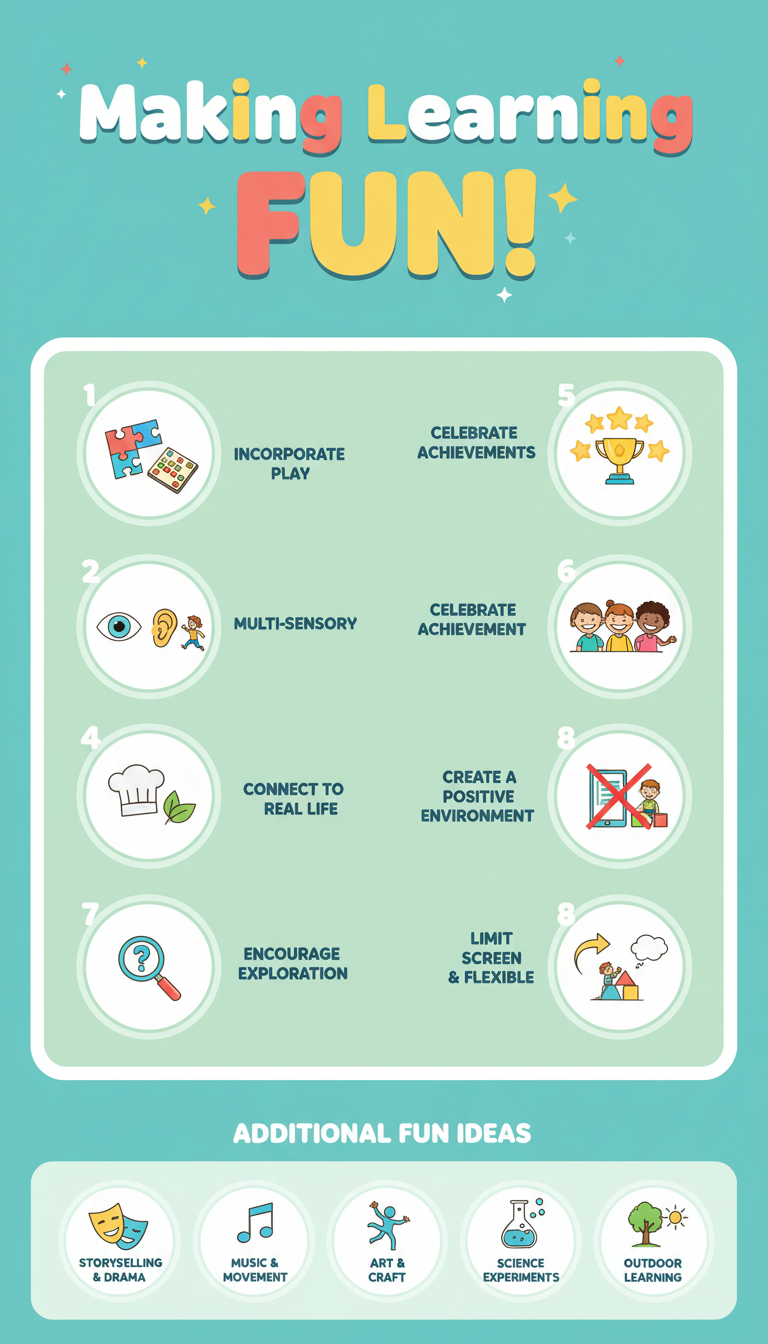
- Incorporate Play: Use games, puzzles, and imaginative play to teach concepts.
- Use Multi-Sensory Approaches: Combine visual, auditory, and kinesthetic activities to cater to different learning styles.
- Connect Learning to Real Life: Relate lessons to everyday experiences, such as cooking to teach measurements or nature walks to explore science.
- Encourage Exploration: Provide materials and opportunities for open-ended discovery.
- Celebrate Achievements: Recognize effort and progress to motivate continued learning.
- Create a Positive Environment: Foster a supportive and joyful atmosphere where children feel valued.
- Limit Screen Time: Balance technology use with hands-on and outdoor activities.
- Be Patient and Flexible: Adapt activities to the child’s pace and interests.
Additional Ideas to Enhance Fun Learning
- Storytelling and Drama: Encourage children to create and act out stories, enhancing language skills and creativity.
- Music and Movement: Use songs, dance, and rhythm games to teach patterns, language, and coordination.
- Art and Craft: Promote self-expression and fine motor skills through drawing, painting, and crafting.
- Science Experiments: Simple, safe experiments spark curiosity and teach scientific thinking.
- Outdoor Learning: Nature-based activities provide sensory experiences and physical exercise.
Conclusion
Making learning fun is a powerful strategy that benefits preschoolers and children beyond in countless ways. It transforms education from a chore into an exciting journey of discovery, fostering intrinsic motivation, social-emotional growth, and confidence. By integrating playful, hands-on, and meaningful activities, parents and educators can create enriching environments where children thrive academically and personally.
Embracing fun in learning not only prepares children for school success but also instills a lifelong passion for knowledge and growth. Let’s make every learning moment a joyful adventure!