Best STEM Toys for 6-Year-Olds: 10 Picks That Build Real Skills (2026 Guide)
Quick answer: the best STEM toys for 6-year-olds are ones your child can mostly do on their own, that show cause and effect right away, and that can be played with in more than one way. Think marble runs, magnetic tiles, dig kits, a real (kid-sized) microscope and simple build-it-yourself robots. Below are 10 picks sorted by the skill they build, plus what to look for and what to skip.
Quick picks at a glance
| If your 6-year-old loves… | Try this | Skill it builds |
|---|---|---|
| Building and knocking things down | Marble race run set | Engineering, gravity, trial and error |
| Making shapes and towers | Magnetic building tiles | Geometry, 2D to 3D thinking |
| Digging, treasure, rocks | Gem dig kit | Earth science, patience, fine motor |
| Bugs, leaves, “what’s inside?” | Kids’ science microscope | Biology, observation |
| Anything that zooms | Balloon-powered car | Forces and motion |
| Robots | Solar-powered robot kit | Following instructions, renewable energy |
| Space and planets | Wooden solar system model | Astronomy, scale, art |
| Brain teasers | Matchstick logic puzzle | Logic, early maths |
Why 6 is a great age for STEM toys
Six is a turning point. Most kids can now follow a short set of picture instructions, sit with a challenge for 15–30 minutes, and ask “why?” about nearly everything. They’re also starting to read and count with confidence, which means toys can move beyond “push the button” into real experimenting: build something, test it, see what breaks, and try again.
That loop of predict → test → adjust is the heart of science and engineering. A good STEM toy for a 6-year-old makes that loop fast and fun, so they get many tries in one afternoon instead of one long frustrating build.
How to choose STEM toys for 6-year-olds (and what to skip)
- Mostly independent play. Your child should be able to do 70–80% of it alone. A little adult help is fine; a toy that needs you for every step usually ends up in a cupboard.
- Instant feedback. The marble rolls or it doesn’t. The car moves or it stalls. Quick results keep 6-year-olds trying.
- More than one way to play. Open-ended toys (tiles, blocks, marble runs) last for years; single-use kits are great gifts but get used once.
- Real tools, kid-sized. A microscope that actually magnifies beats a plastic look-alike every time.
- Age labels and small parts. Check the age on the box, especially if a younger sibling is around. Toys with small magnets or tiny pieces need extra care (see the safety note below).
Skip: toys that are mostly a screen, “STEM” toys where the child just watches something happen, and kits that are really aimed at 10–12-year-olds (they look impressive but lead to frustration).
The 10 best STEM toys for 6-year-olds
1. Marble race run set (engineering)
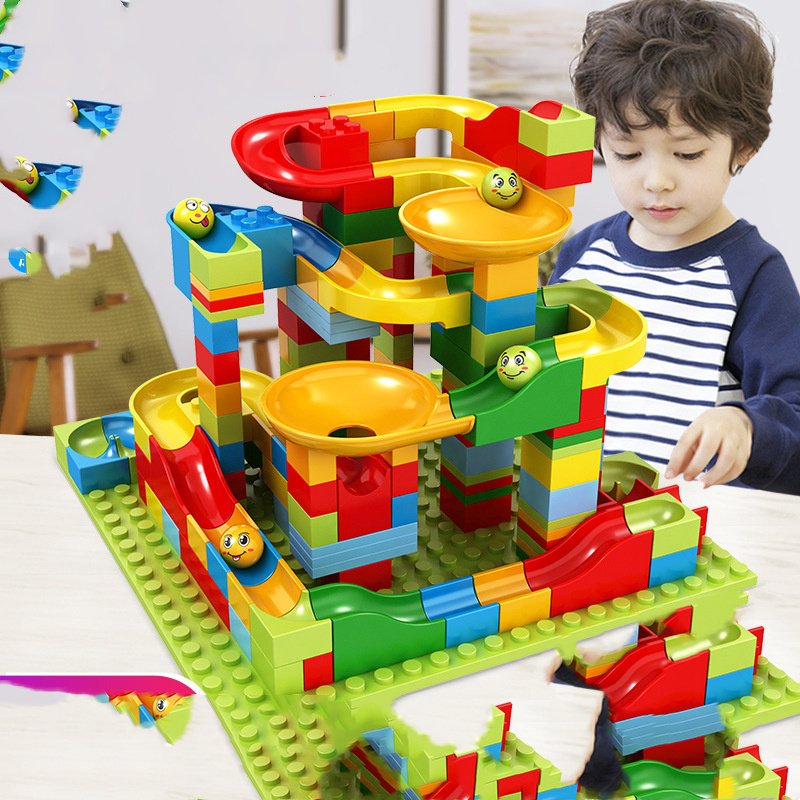
A marble run is the perfect first engineering toy: kids design a track, drop a marble, watch where it fails and fix it. They learn about slopes, speed and gravity without anyone calling it a lesson. Our marble race run building block set uses funnel slides and block pieces, so it doubles as a regular building set.
Try this: challenge your child to make the marble take as long as possible to reach the bottom. It turns into a real design problem.
2. Magnetic building tiles (geometry)
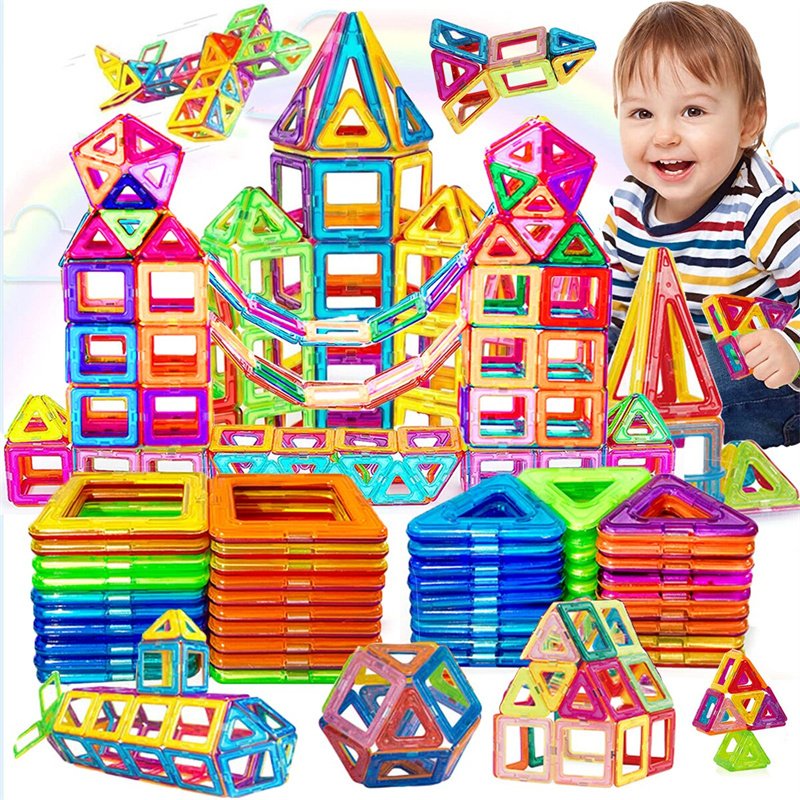
Magnetic tiles snap together at the edges, so 6-year-olds can turn flat squares and triangles into cubes, pyramids and towers in seconds. It’s hands-on geometry: kids discover that six squares make a cube and that triangles make the strongest roofs. Our magnetic building tiles set comes in sizes from 60 to 184 pieces. Wondering whether tiles or classic blocks are the better buy? We compare them in magnetic tiles vs building blocks.
3. Gem dig kit (earth science)
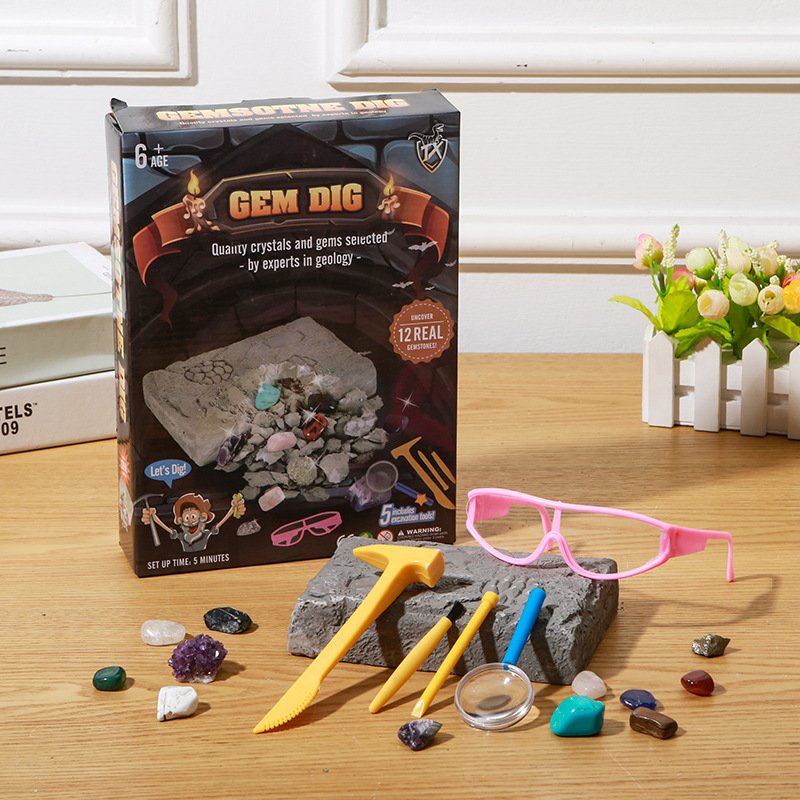
Chipping away at a plaster block to find real gems is pure excitement for this age, and it secretly builds patience and fine motor control. Afterwards, kids can sort their finds by colour, shape and hardness, which is real geology. The gem dig kit includes 17 gems and digging tools. Put down newspaper: it gets dusty in the best way.
4. Kids’ science microscope (biology)

Few things beat the moment a child sees an onion skin, a feather or a drop of pond water up close. A kids’ science microscope kit gives 6-year-olds a real tool and a reason to explore the backyard. If you’d like something they can take outside, the pocket microscope is a smaller, grab-and-go option.
5. Balloon-powered car (forces and motion)
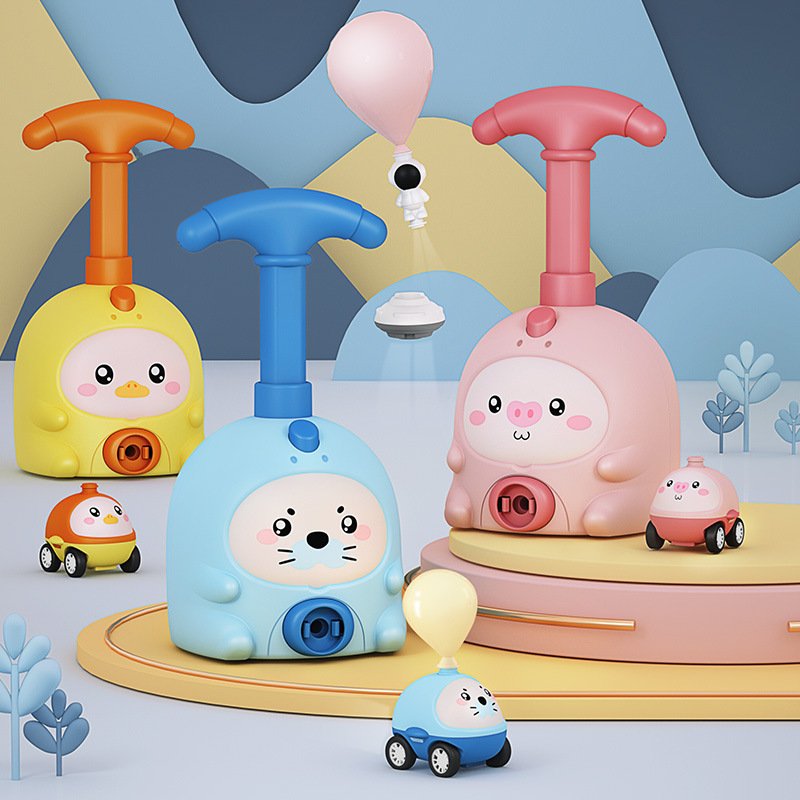
Blow up the balloon, let go, and the air rushing backwards pushes the car forwards: it’s Newton’s third law in a form a 6-year-old can feel. The balloon-powered car is cheap, fast and great for “which one goes furthest?” races with siblings or friends.
6. Solar-powered robot kit (robotics and energy)
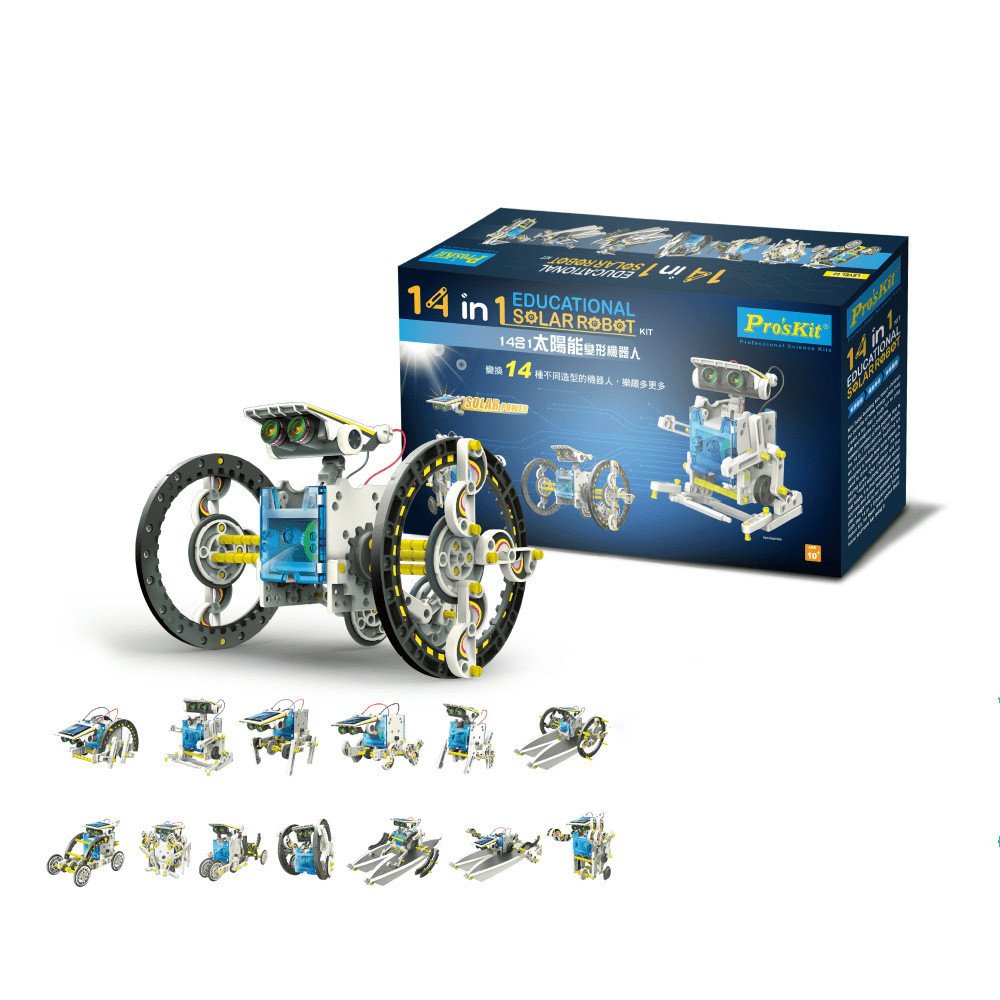
A first robot kit should be one a child can build with you in an afternoon and then actually use. The solar-powered robot building kit runs on sunlight, so there are no batteries to swap, and it opens up great conversations about where energy comes from. Expect to help with the trickier steps at age 6; that’s part of the fun.
7. Wooden solar system model (astronomy)
Painting and assembling the planets is part art project, part science lesson. Kids learn the order of the planets, which ones are biggest, and why the Sun is in the middle. The wooden solar system model kit makes a lovely bedroom decoration afterwards. Pair it with a beginner telescope for older 6-year-olds who want to see the Moon’s craters for real.
8. Matchstick logic puzzle (maths and logic)
“Move two sticks to make the equation true” is the kind of challenge 6-year-olds love once they get the hang of it. The wooden matchstick logic puzzle game builds early maths and flexible thinking, and it’s a great screen-free option for car trips and waiting rooms.
9. Newton’s cradle (physics)
Pull back one ball and one flies out the other side. Pull two, and two fly out. A Newton’s cradle invites endless “what if” experiments about energy and momentum, and it lives happily on a desk long after other toys are forgotten.
10. Micro building blocks (fine motor and following instructions)
For kids who already love building, tiny “micro” bricks are a step up. Following a picture guide to build a space rocket and satellite micro building set trains focus, sequencing and finger control. The pieces are small, so keep them away from toddlers.
A quick safety note on magnets and small parts
Magnetic building toys are safe for most 6-year-olds when the magnets are sealed inside the pieces. The real danger is loose magnets: if a child swallows more than one, they can attract each other inside the intestines and cause serious injury. Health Canada advises parents to check toys for loose magnets, remove any that have come out, keep magnetic toys away from children under 3, and seek medical care immediately if a magnet may have been swallowed.
How to get more out of STEM toys for 6-year-olds
- Ask, don’t tell. “What do you think will happen?” teaches more than explaining the answer.
- Celebrate the failures. A collapsed tower or a stalled car is data. Ask what they’d change next time.
- Rotate toys. Put half the toys away and swap them every few weeks; old toys feel new again.
- Make a “lab notebook”. Drawing what happened is early scientific recording, and kids love it.
Next step for older kids: once your child is 8 or older and confident with building kits, a programmable smart robot tank kit introduces real coding with an adult’s help.
Still not sure which one fits your child? Take our 30-second toy finder quiz or browse all our STEM & science toys.
Frequently asked questions
A good STEM toy for a 6-year-old is one they can mostly use on their own, that gives quick results, and that can be played with in more than one way. Marble runs, magnetic tiles, gem dig kits, kid-sized microscopes and simple robot kits are all strong choices at this age.
Screen-free robots that you build or program with buttons are fine for most 6-year-olds with a little adult help. Robots that need a computer or app-based coding usually work better from around age 8.
Magnetic tiles with magnets sealed inside the plastic are generally safe for 6-year-olds. Check pieces regularly for cracks or loose magnets, remove damaged tiles, and keep them away from children under 3. If a magnet may have been swallowed, seek medical care immediately.
Not many. Two or three open-ended toys, such as building tiles, a marble run and a microscope, plus one new kit every few months, is plenty. Rotating toys keeps them interesting.
Build towers from paper cups, make a ramp from cardboard and race toy cars, mix baking soda and vinegar, or measure ingredients together while baking. The goal is to predict, test and talk about what happened.