Magnetic Tiles vs Building Blocks: Which Is Better for Your Child?
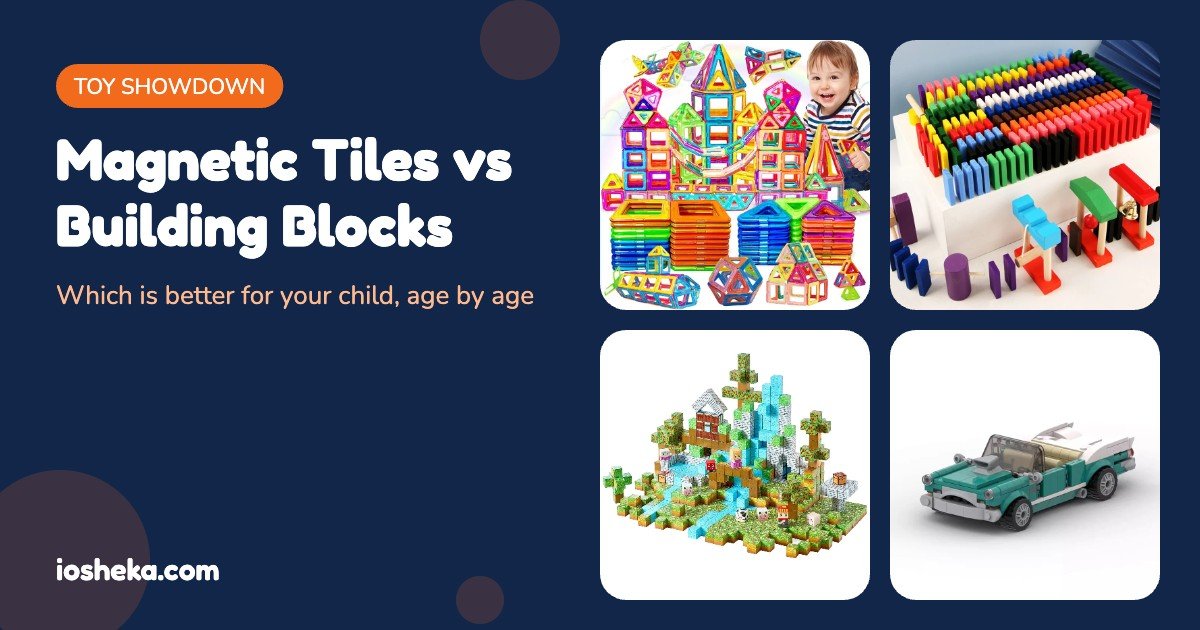
Magnetic tiles vs building blocks: the quick answer. Magnetic tiles are easier and faster for younger kids (about 3–6) and are brilliant for shapes, symmetry and big 3D structures. Building blocks and bricks give older kids (about 5+) more precision, more detail and more of a challenge. Neither is “better”. If you can only pick one, choose by age and by how patient your child is. If you can have both, they work beautifully together.
Magnetic tiles vs building blocks: side by side
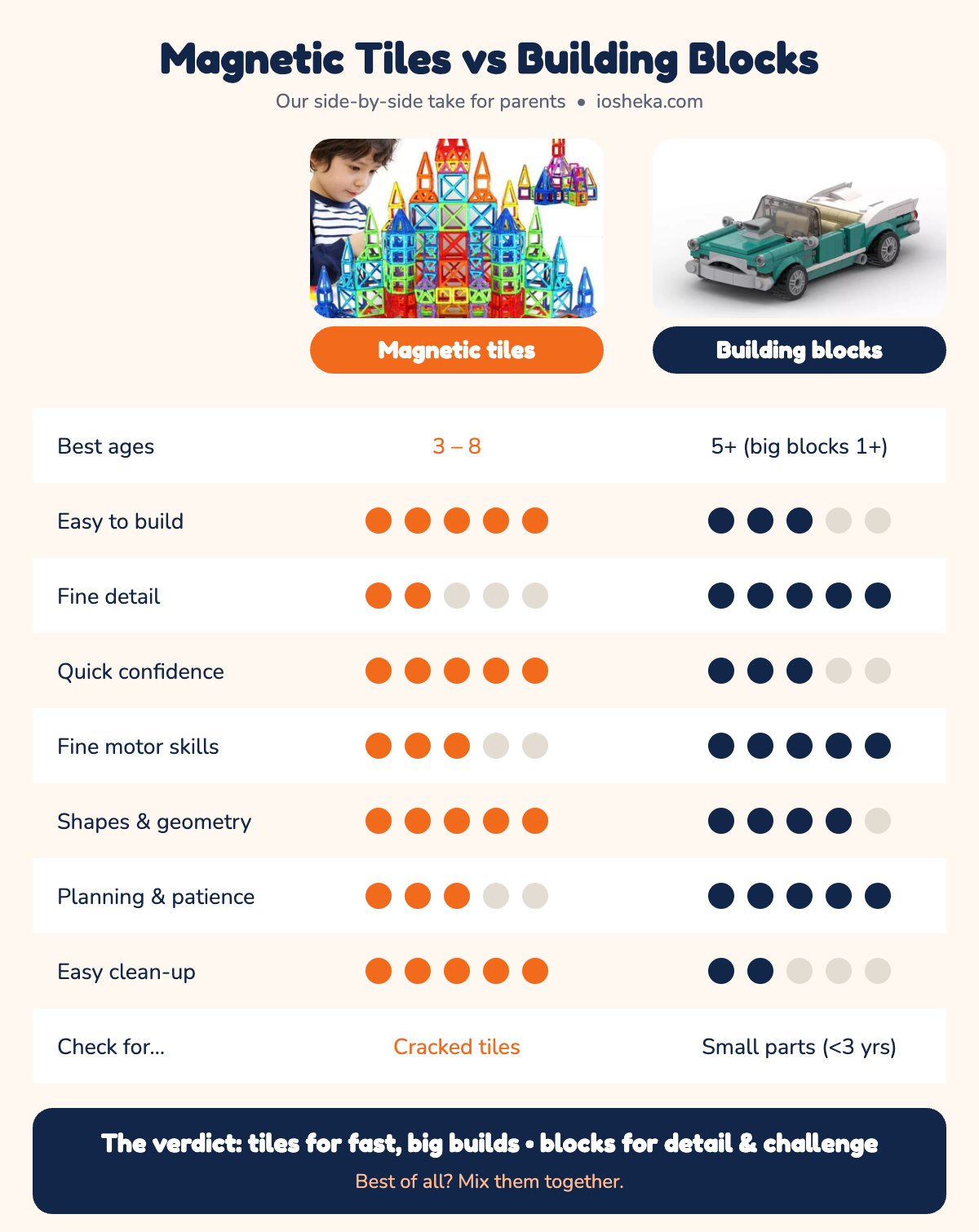
| Magnetic tiles | Building blocks & bricks | |
|---|---|---|
| Best ages | About 3–8 (great from preschool) | Big wooden blocks from 1+; small bricks from about 5+ |
| How easy to build | Very easy: edges snap together on their own | Takes more balance, pressure or precision |
| Main skills | Shapes, symmetry, 2D → 3D thinking, colour mixing | Planning, balance, fine motor control, following instructions |
| Level of detail | Big, bold structures; less fine detail | Tiny details possible (cars, cities, models) |
| Frustration factor | Low: builds go up fast | Medium: towers fall, pieces don’t fit yet |
| Lasts for years? | Yes, especially with add-on sets | Yes, bricks grow with kids into teens |
| Safety to check | Cracked tiles with loose magnets | Small parts for under-3s |
| Clean-up | Easy: tiles stack flat | Small bricks get everywhere; use a play mat |
What are magnetic tiles?
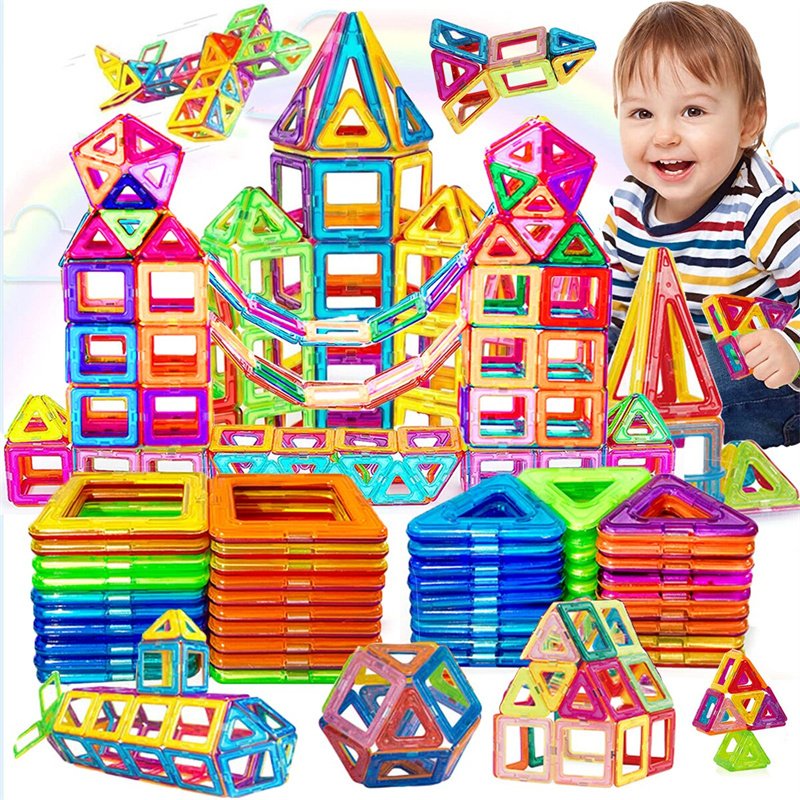
Magnetic tiles are flat plastic shapes, usually squares and triangles, with small magnets sealed along the edges. Put two edges close and they snap together. Because the magnets do the holding, kids can build walls, cubes, tunnels and towers almost instantly, often taller than they could with ordinary blocks. Many sets have see-through coloured panels, so they look amazing on a sunny windowsill or over a light table.
What counts as building blocks?
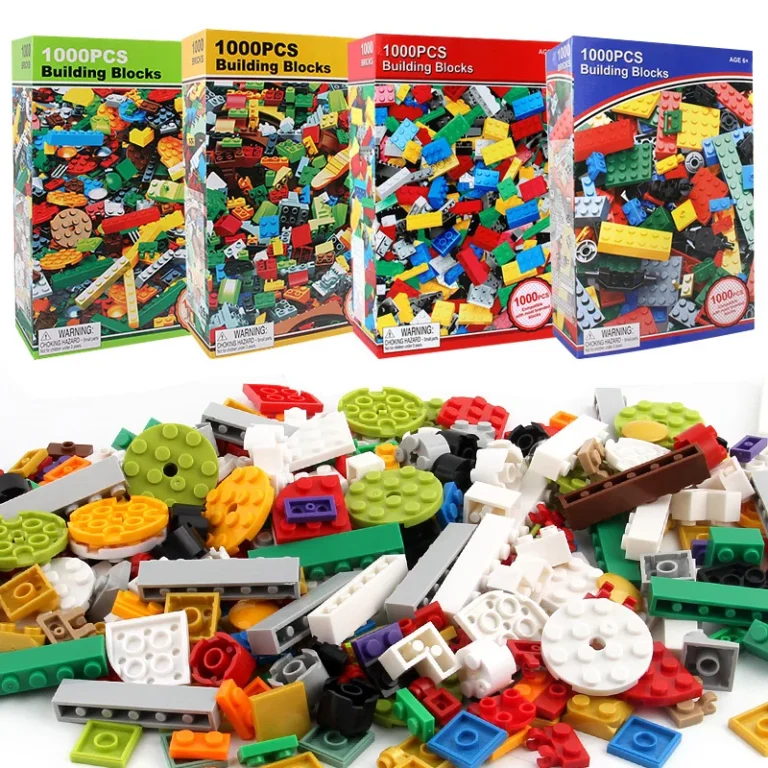
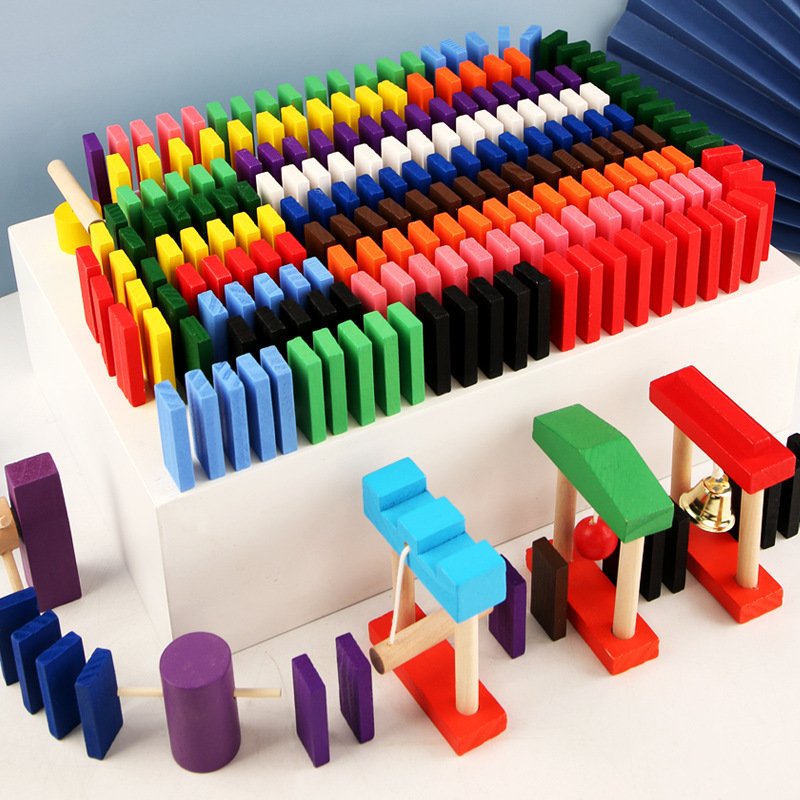
“Building blocks” covers everything from chunky wooden blocks for toddlers to snap-together plastic bricks for older kids. Wooden blocks rely on balance and gravity: stack carefully or the tower falls. Interlocking bricks click together with studs, which lets kids build detailed models, from cars to whole cities, often by following step-by-step instructions.
Which skills does each one build?
Magnetic tiles are strongest for…
- Geometry and spatial thinking: kids see how flat shapes fold into 3D ones (six squares make a cube; four triangles make a pyramid).
- Symmetry and patterns: it’s easy to build mirror images and repeating designs.
- Confidence: quick success makes it a great first construction toy for kids who give up easily.
- Early science: kids notice that magnets attract and repel, and that coloured panels mix colours when they overlap.
Building blocks and bricks are strongest for…
- Fine motor skills: pressing small bricks together builds hand strength and control that help with writing.
- Planning and patience: balancing a wooden tower or finishing a 300-piece model teaches kids to slow down.
- Following instructions: step-by-step builds train sequencing and attention.
- Engineering: kids learn what makes a structure stable (wide bases, overlapping bricks) through trial and error.
Magnetic tiles vs building blocks, age by age
- Ages 1–2: big, soft or wooden blocks. Skip magnetic tiles and small bricks for now. Try our soft building blocks set or a wooden rainbow stacking tower.
- Ages 3–4: magnetic tiles shine here. Kids get big results without frustration. Pair with wooden domino blocks for balance play.
- Ages 5–6: the crossover years. Tiles for big imaginative builds; start introducing bricks and simple model sets like a 325-piece classic brick set.
- Ages 7+: bricks and detailed models usually win. Tiles still get used for quick projects, marble-run tunnels and play with younger siblings.
Safety: what parents should know
The magnets in good-quality tiles are sealed inside the plastic. The risk comes when a tile cracks and a magnet falls out: if a child swallows more than one magnet, they can pull together inside the intestines and cause serious injury. Check tiles now and then, throw away any cracked ones, and keep magnetic toys away from children under 3. Health Canada advises getting medical care right away if you think a child has swallowed a magnet. For building bricks, the main concern is small parts for babies and toddlers.
Why many families end up with both
When it comes to magnetic tiles vs building blocks, the best answer is often both: they are better together. Tiles make fast walls and roofs; blocks add towers, furniture and detail. Kids can build a tile garage for brick cars, or a tile tunnel for a marble race run. Mixing the two also keeps play fresh, so both sets get used for longer.
Our picks
Magnetic
- Magnetic building tiles construction set: the classic, from 60 to 184 pieces
- Magnetic tiles building set: 48 to 120 pieces, so you can start small and grow
- Big magnetic construction set: magnetic rods and balls for frameworks
Blocks & bricks
- Wooden rainbow domino building set: balance, patterns, chain reactions
- Classic 325-piece brick set: a great first brick set
- Marble race run building set: building plus physics
Shopping for a 6-year-old specifically? See our guide to the best STEM toys for 6-year-olds, or browse all building sets.
Frequently asked questions
Neither is better overall. Magnetic tiles are easier and faster, so they suit younger kids and big 3D builds. Building blocks and bricks offer more precision and challenge, so they suit older kids and detailed models. Many families use both together.
Magnetic tiles are most popular from about age 3 to 8. Younger children should only use them with supervision, and they should be kept away from children under 3 because of the magnets inside.
For most families, yes. They are durable, open-ended and get used for many years, especially if you add to the set over time. Check that magnets are fully sealed and that the plastic feels sturdy.
Yes, and kids love it. Tiles are great for walls, roofs and tunnels, while blocks and bricks add towers, details and characters. Mixing them keeps both sets interesting for longer.
Remove it from the set straight away and check that no magnet has come loose. If you think a child may have swallowed a magnet, seek medical care immediately.